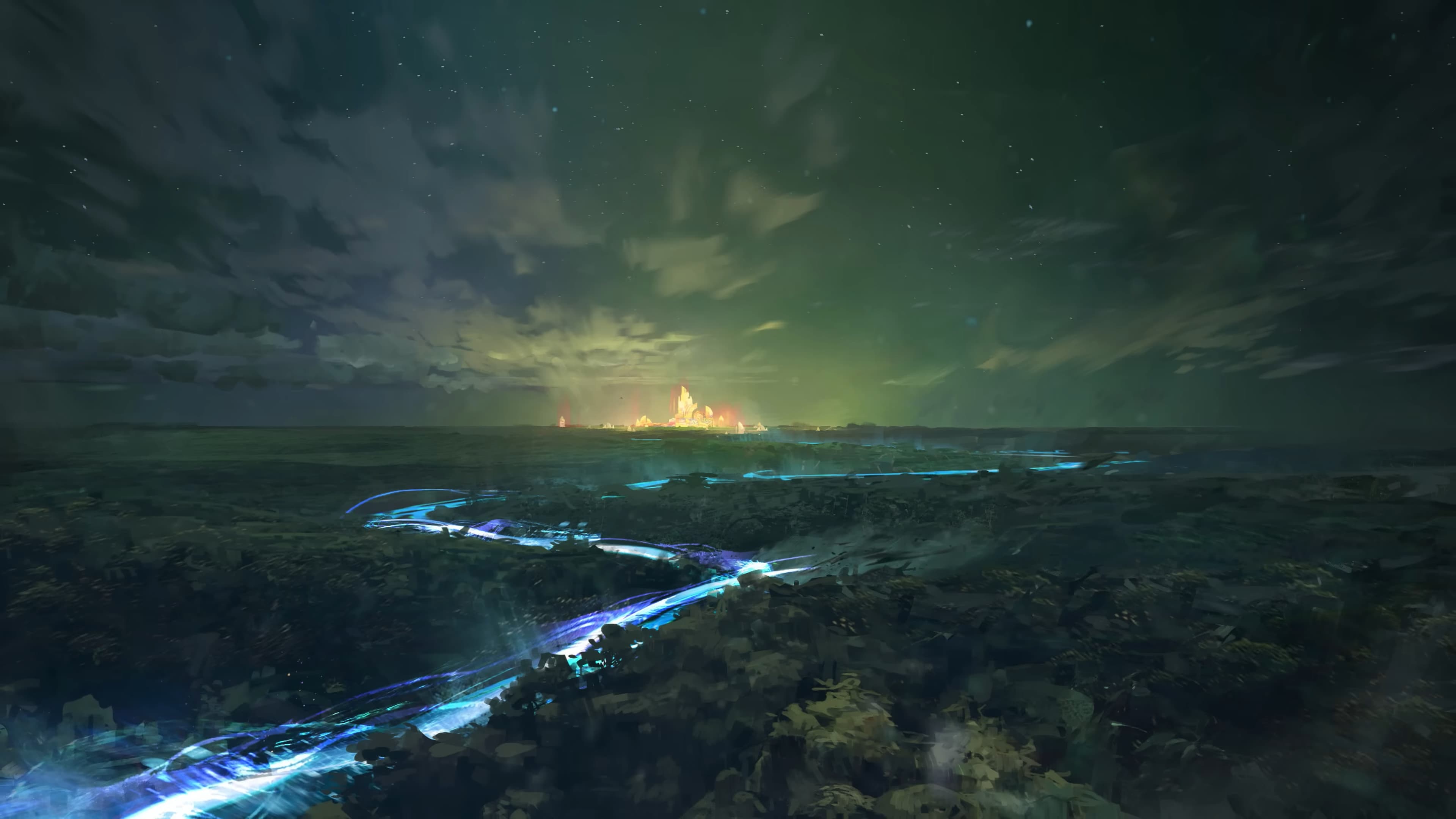
Every hour I've ever spent in Orr, I spent in a graveyard.
If you played Guild Wars 2, you know it. Cursed Shore, the Straits of Devastation, Malchor's Leap — the level-80 zones where the whole map is the color of a bruise and the Risen claw up out of the ground faster than you can put them down. I ran those beaches for crafting mats until I could do it half-asleep. Gorgeous, in a rotting kind of way. But dead. Zhaitan had hauled the sunken kingdom up off the seabed, and you spent the back half of the story slogging through what was left of it, all the way to that airship finale where you finish off an Elder Dragon by — I will never be over this — firing a cannon at it.
So when the reveal said Guild Wars 3 is set in Orr, my first thought was, great, more swamp. Then I kept reading. It's set more than a thousand years before any of the history I know. Before the Cataclysm dragged it under. Before the gods walked out. Cities still in the sky, the land still green, Orr still — for once in its miserable existence — alive.
The when and the where
Here's what's actually nailed down. The setting blog — they're calling it Stepping into Ancient Orr — puts the game on the continent of Orr, more than a thousand years before Guild Wars Reforged. (Reforged is the remaster of the original Guild Wars, if you're new, so read that as "a very long way back.") The gods haven't left yet. The God of Death was just overthrown. The First Guild War hasn't happened — and since the franchise is named after that war, that tells you how early we are. Rival guilds are already going for each other's throats, and the guild you're going to belong to is losing ground.
You join the Vaelwardens. That's the name from the main announcement, anyway — the setting blog turns around and calls them the Order of the Vael, so take your pick, because ArenaNet clearly hasn't.
Of all the places, Orr
Orr isn't a random pick. It's the wound the whole series is built around. The Cataclysm that sank it — the vizier, the charr invasion, the Lost Scrolls — is the thing GW1 players have been turning over for twenty years. The blog reels off the rest of the connections itself: the disappearance of the gods, the rise of Grenth and the fall of Dhuum, Abaddon's whole descent from Nightfall. The Exodus. Every bit of it runs back through Orr. And every bit of it happens after the moment Guild Wars 3 drops us into.
That's the part that gets me. For once we're not poking through the aftermath. We're standing right at the start of it, before the cataclysms and the betrayals, watching a bunch of people who have no idea what's coming for them.
What a living Orr looks like
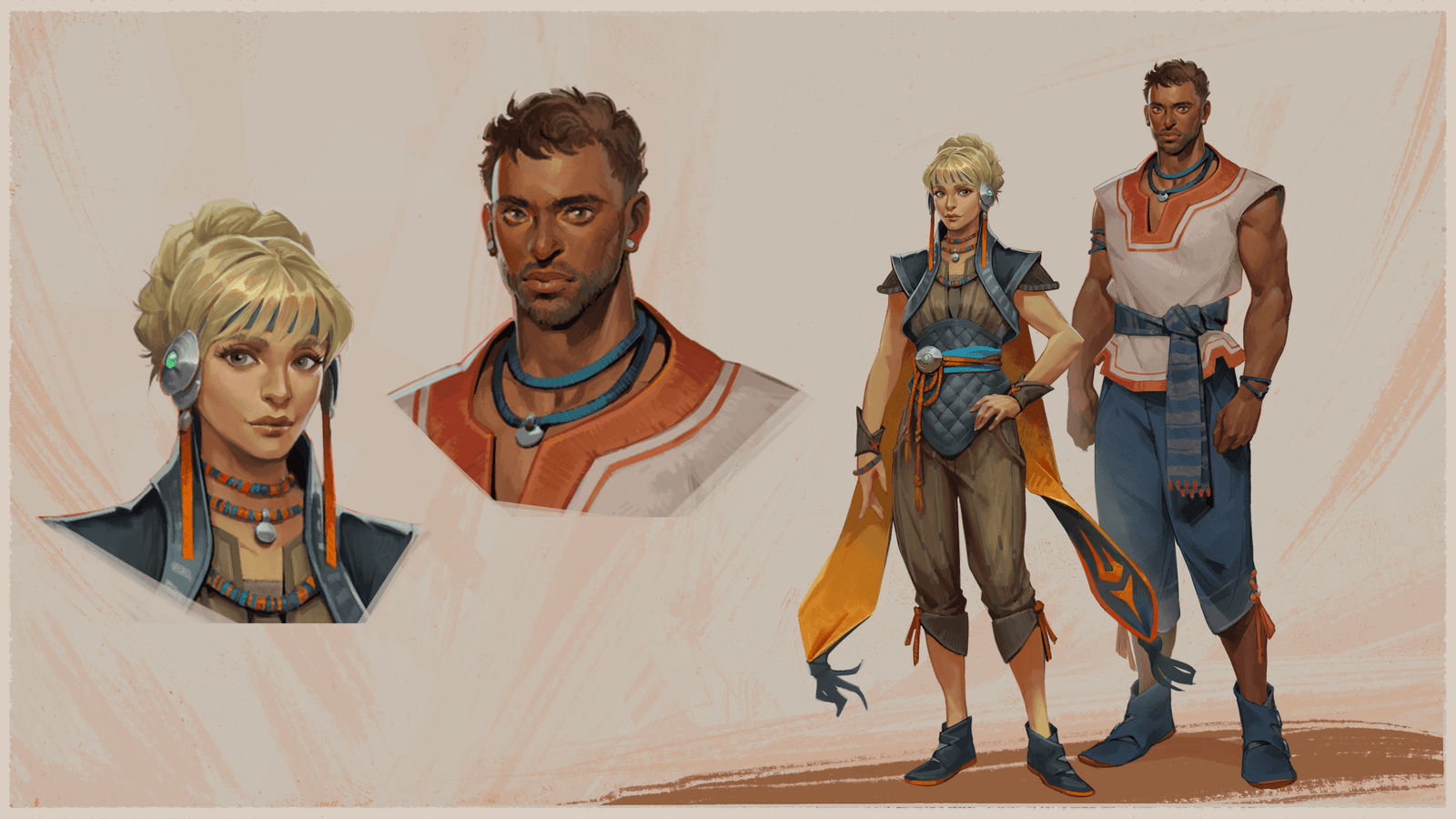
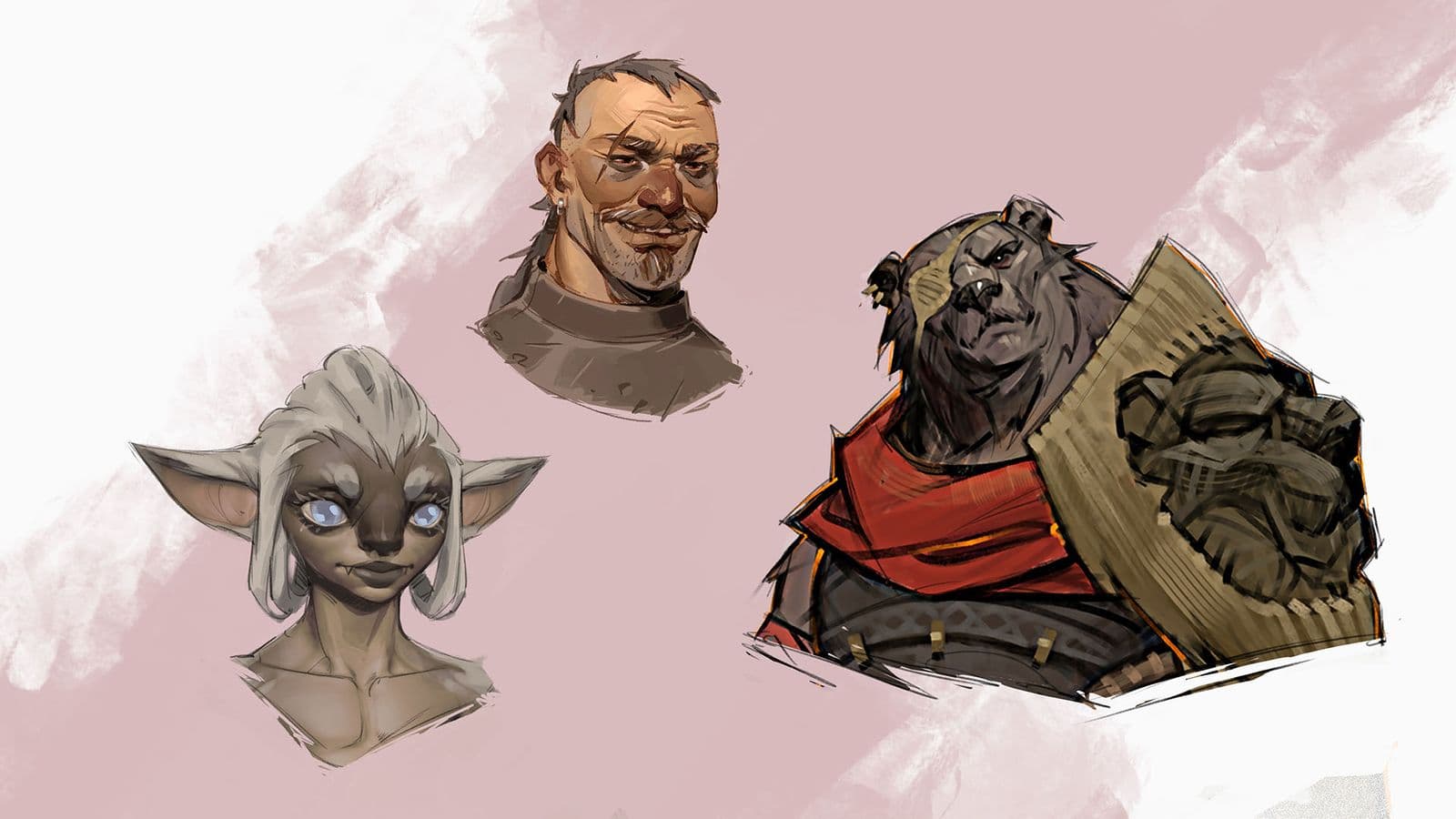
Most of what we actually know about the vibe is in the video, not the written post — the devs talking over concept art — so weight it that way. Orr is in its golden age. The gods are still around and still hands-on, handing the work of running the land to a few trusted guilds. Magic is rationed. Regular people don't get any; only the guilds the gods and some "high council" sign off on do, and of course everyone else wants it, and of course that goes wrong. (I have never once heard of a high council of Orr, so either it's brand new or it's buried somewhere I've never dug.
And there's a city in the sky. The narration shows it floating over the forests, visible from everywhere, beautiful and faintly menacing — heaven if the gods are fond of you, a problem if they're not. I've ever stood in is the drowned ruin at the bottom of the sea where GW2 sends you to kill Zhaitan, so I'd want that confirmed before I bet on it.
Down under all of that, life is almost boring: farms, livestock, more mouths than the fields can feed, everyone on edge about it. When things go sideways, people go to the Vaelwardens — the guild sworn, per the announcement, to protect the land, the folk living outside the town walls, and the nature spirits of Orr. Oldest guild on the continent, the video says. And they're dropping the ball. Not out of laziness — out of being stretched too thin, too few of them for far too much ground. That's the gap you walk into.
Smaller map, bigger world
The smartest call in the whole reveal: they're making the map smaller. Bobby Stein, the narrative director, says it flat out in the video — they're done with the world-ending, the-stakes-are-now-the-entire-planet escalation the series has run on for years. And speaking only for me: thank god. After a decade of Elder Dragons and one apocalypse stacked on the last, a story about one region and the people who live in it sounds like a vacation. The blog backs him up. Guild Wars 3 starts small and close — one place, built deep instead of wide, fewer loading screens, the sort of world that's meant to reward you for coming back to it.
"We built one region and we built it properly" is exactly what I wanted to hear.
This isn't a goodbye to Guild Wars 2
And no, this doesn't mean they're shelving Guild Wars 2 — that was my first worry, and I doubt I'm the only one. Setting GW3 a thousand-plus years in the past is half the point: a sequel set after GW2 would choke off everything they still want to do there. Keep it in the deep past and the present stays wide open. They've committed to all three games carrying on, GW2 included, with new content after GW3 ships. Whatever this is, it isn't the quiet death some of us were bracing for.
Where the lore brains have already gone
The reveal opens on Balthazar. The God of War, standing on a pillar of fire, sword in one hand and a severed head in the other. If you know the deep lore your stomach drops, because there's an old story — I couldn't tell you if it's hard canon or just something we all repeat — that Balthazar turned up in Tyria carrying his own father's severed head, and the games have never spelled it out. And here's that exact image, front and center, in a game set back when the gods still walked the world. The post name-drops Grenth, Dhuum, and Abaddon on top of it. So the questions are already everywhere: which gods do we actually meet, do we finally get the Balthazar story, what is the deal with a capital that flies. Wooden Potato has a whole breakdown up already.
Guessing. All of it. But that art got picked by people who knew precisely what it would do to us.
What's real and what I'm guessing
Quick line in the sand, because this is a fan site and I'd rather you trust it. Real, straight from ArenaNet's blogs: Orr, the timeline (a thousand-plus years before Reforged), the gods still present, the toppled God of Death, the Vaelwardens. Real, but only from the video: the rationed magic, the high council, the flying city. Confirmed by nobody: the exact year, which gods turn up, the playable races and professions, a single plot beat. Beta's set for fall 2027, and they've said more is coming through the rest of this year and into next — so depending on when you're reading this, some of the above may already have moved.
Orr is where this starts, not where it ends — they keep saying that, and I believe them, and I'm already impatient for the rest. But that's not the part I keep circling. For as long as I've played these games, Orr has been a place you go to mourn. Now I get to stand in it while it's still breathing. I didn't know how badly I wanted that until they showed it to me.
Shoutout to WoodenPotatoes. I was not that deep into the lore but glad I've found his videos. Worth taking some time to watch them all.

Discussion · 0
Sign in to join the discussion — be kind, be Tyrian.
Sign InNo comments yet. Be the first to share your take.